
“The oil and gas industry is a leader in sustainability and a pioneer in the prevention and adaptation to climate change”: ACP
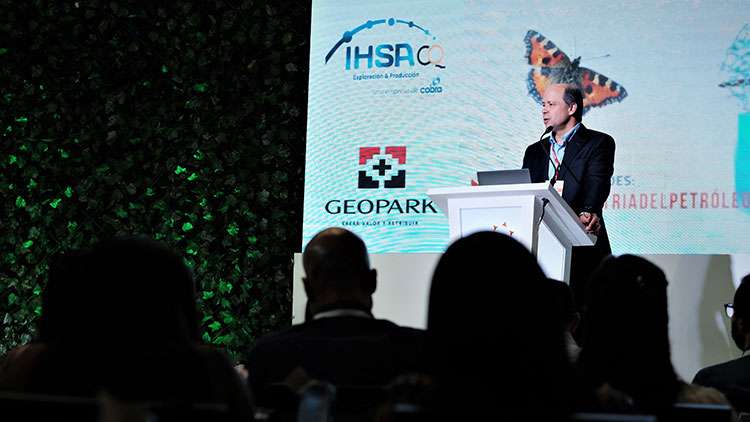
Sustainable development, climate change, energy transition, and diversification of the fuel basket were the main topics of conversation on the first day of the Great ACP Forum: Sustainability Facts, which started today in Barranquilla, with the participation of more than 400 attendees, including industry leaders, sustainability experts, government, unions, and academia, who gather at the first event of the oil and gas industry dedicated to sustainability, with the aim of analyzing the role, commitment, and contributions of the sector to the sustainable development of Colombia and its regions.
- The Great ACP Forum: ‘Sustainability Facts’ began in Barranquilla, with the participation of more than 400 attendees, including leaders and professionals from the sector, government, unions, sustainability experts, and academia.
- Companies in the sector presented initiatives that demonstrate their commitment and contributions to the achievement of the SDGs.
“The hydrocarbons sector is not only in a position to show facts with which it contributes to the achievement of the Sustainable Development Goals (SDGs), but it is also a leader in environmental sustainability and a pioneer, with the government, in real and concrete actions for the prevention and adaptation to climate change,” highlighted Francisco José Lloreda Mera, president of the ACP at the opening session of the event.
Lloreda emphasized that, “sustainable development is possible with energy security,” and that the oil and gas industry in Colombia is socially, environmentally, and operationally sustainable, thanks to having a sustainability strategy framed within the SDGs, and to being prepared for the transformation taking place in society and continuing to be part of the future.
Among other speakers, on its first day, the event featured the participation of the mayor of Barranquilla, Jaime Pumarejo; the acting Minister of Environment and Sustainable Development, Nicolás Galarza; the director of Conservation International, Fabio Arjona; the president of the National Hydrocarbons Agency (ANH), Armando Zamora; the Minister of Mines and Energy, Diego Mesa; the director of the National Authority of Environmental Licenses (ANLA), Rodrigo Suárez; and presidents of companies in the sector and experts.
After presenting the national government's sustainability vision, the acting Minister of Environment and Sustainable Development, Nicolás Galarza, highlighted the importance of the oil and gas industry in terms of decarbonization, and the joint work in promoting sustainable practices and meeting medium- and long-term climate action goals, to bring the country closer to the energy transition and a cleaner production model.
In turn, the Minister of Mines and Energy, Diego Mesa Puyo, pointed out that, “from a macroeconomic perspective, this sector is fundamental for national accounts, accounting for about 3.3% of GDP, and in terms of the trade balance, it represents 40% of exports, which is why we must strive for that perfect balance between energy transition, renewable energies, and energy security.”.
Companies in the sector presented various initiatives that contribute to climate change management and that demonstrate with facts the importance that the industry places on fighting this issue and its commitment to being an ally of the country in achieving the goals for reducing Greenhouse Gases (GHG) and reaching carbon neutrality, among other contributions, for example in terms of energy efficiency, air quality, and ecosystem conservation.
Regarding the downstream segment and its contribution to sustainability, the importance of having a diverse fuel basket was highlighted, as well as the predominant role of liquid fuels in this, since they currently represent 96% of the final energy consumption of the transport sector and are expected to continue having a share of over 60% by 2050.
The Forum culminates tomorrow with sessions discussing the importance of natural gas; the social dimension of the energy transition and its implementation in the regions; as well as human rights; diversity, equity, and inclusion; and circular economy.
Find the photos of the day at this link: https://bit.ly/3L5ciSj
 Colombian Association of Oil and Gas