
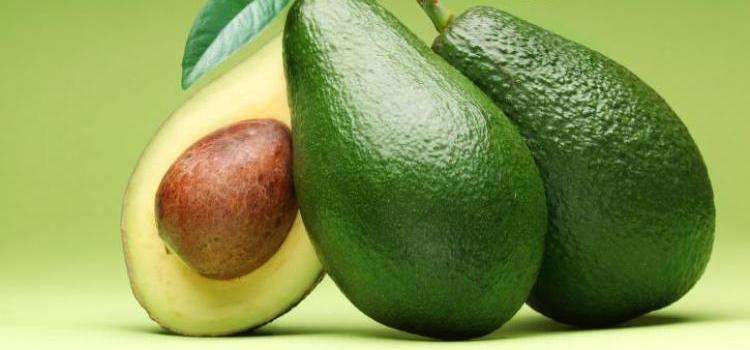
No. The avocado is not more important than oil for Colombia.
Colombia is not the United States or Saudi Arabia, the main crude oil producers, but it has oil and gas, and its development in the last hundred years has been linked to that of the industry. And in the last two decades, it has been decisive, to the point that it came to represent half of exports, 23% of fiscal revenues, and two points of its economic growth; not counting the dividends from Ecopetrol and the royalties.
There is no other sector of the economy in equal condition to contribute cash to the country. Only in taxes between 2005 and 2015, it contributed $200 billion pesos, and this year, after the crisis, it is estimated to contribute between 10 and 13 billion in taxes and royalties, in addition to 3.3 billion in dividends from Ecopetrol (2017). Thirty oil companies contribute in income the same as the 3,000 that follow or 2 million individuals!
Without delving into its importance for energy security and even for employment. 30% of electricity generation is with gas, and more than seven million households, especially those with low resources, use natural gas. And although this industry is not intensive in employment (140,000 in 2012 and 78,000 in 2016 -during the full crisis-), its chaining is. It is no coincidence that it contracted $35 billion in goods and services in 2012 and $13 billion in 2016.
Regarding avocado, it is one of the fruits with the highest demand worldwide. Last year, 5 million tons were consumed, especially in the United States and Europe: 95% of that avocado is Hass variety (smaller and with dark, wrinkled skin). The largest producer is Mexico, followed by Chile and the Dominican Republic, although Chile has decreased its production, despite the growing demand, particularly in Europe.
Colombia has then rightly seen a golden opportunity in Hass avocado. National production has grown in seven years to reach 78,000 tons, and in 2018, exports are estimated to be close to US$60 million. A modest figure compared to oil and its derivatives exports (US$13,000 million, 2017) or coffee (US$2,379 million in 2016), but very important and with a progressive increase.
But for avocado, including all its varieties, to replace the value of the country's oil exports, it is necessary to plant 1.4 million hectares and produce 3.5 times more avocado than the world production. All of the above assuming that the product flooding does not collapse prices and ruin the business. Colombia would have to go from 332,000 tons of avocado to more than 17 million!
But it is not about choosing. Agriculture must be promoted, including avocado where there is an opportunity. But not to the detriment or as a substitute for other competitive goods, including oil and gas. A country does not grow by destroying but by creating wealth, and if something has been demonstrated by the oil industry in a hundred years, it is that it has been, is, and must be an instrument of development. Even to produce more avocado.
Follow on Twitter @FcoLloreda
 Colombian Association of Oil and Gas