
From cost to value: how investments in sustainability generate value for companies
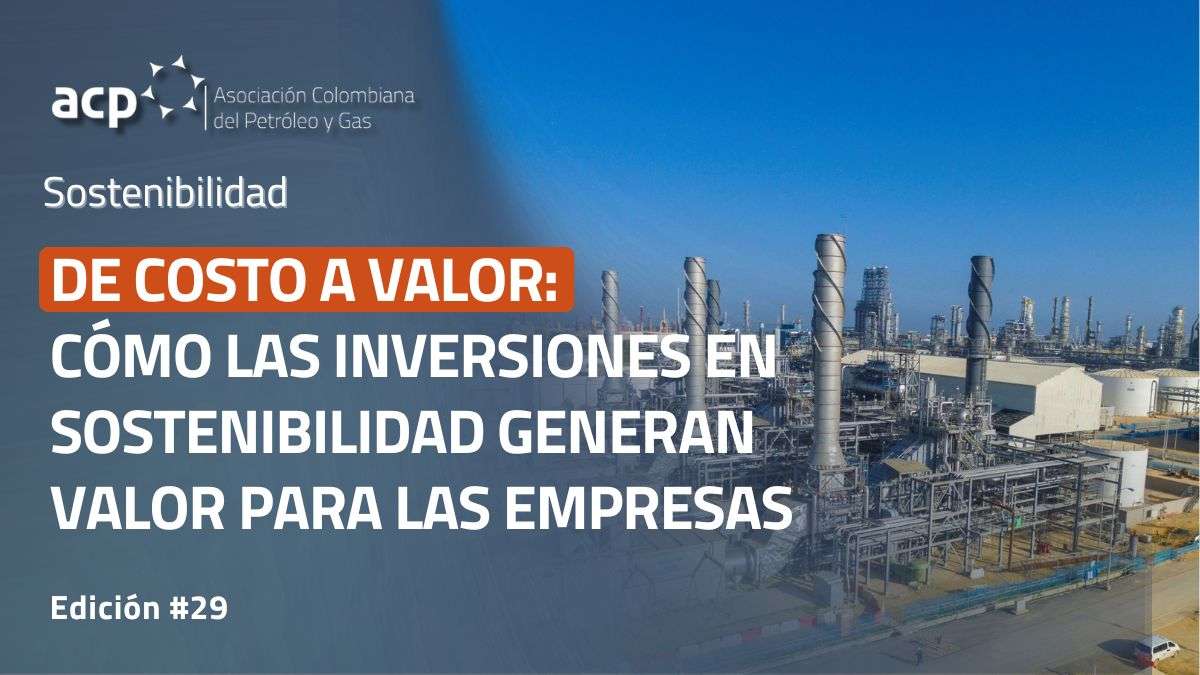
The evidence shows that sustainability is no longer a cost for companies, but an opportunity that opens the possibility of increasing the annual allocation of resources for these types of initiatives for the benefit of the environment, communities, and corporate finances.
By: María Ximena Álvarez, head of Sustainable Performance, Ecopetrol
In a world where facing climate change and social inequalities are a priority, investments in sustainability can no longer be seen as a cost or a philanthropic responsibility for companies. On the contrary; they must be understood as a strategic component that generates tangible and quantifiable value for companies and society.
The value of sustainability is not only derived from the improvement of corporate reputation or the achievement of a license to operate. Today, thanks to advances in value measurement methodologies, the Ecopetrol Group calculates how investments in sustainability contribute to the company's net profit and significantly contribute to the Gross Domestic Product (GDP) of the regions where it operates.
Companies that, like Ecopetrol, today integrate sustainability into their business strategy show improvements in the profitability of their investments. In 2023, for the first time in its history, the Ecopetrol Group was able to demonstrate that, through investments in climate change, water, sustainable territories, and science, technology, and innovation (CT+i), it generated new revenues, savings, and avoided costs, which are ultimately reflected in the company's net profit.
By incorporating this variable into the financial statements of 2023, it was confirmed that investments in sustainability contributed more than 60 billion pesos to the net profit of the Ecopetrol Group.
For example, with investments in renewable energies, a key lever for climate change, reductions were achieved in energy costs and in the CO2 tax. Likewise, improving relationship practices with communities in the regions where the company operates generated savings by reducing alarms and the average duration of incidents. Thus, sustainability ceased to be a cost and became a generator of quantifiable financial value.
In 2023, through investments in sustainability, the Ecopetrol Group contributed more than 1.2 trillion pesos to the GDP of 26 departments in Colombia.
The impact on regional GDP
In addition to financial benefits, the Ecopetrol Group wanted to demonstrate how investments in sustainability are a catalyst for regional economic development. When a company invests in sustainability, it also contributes to strengthening the local economy, as it generates direct and indirect jobs, promotes environmentally sustainable practices, fosters technological innovation, and improves infrastructure. All of the above contributes to leveraging the GDP of the regions, enhancing the competitiveness and resilience of local economies.
In this sense, natural climate solutions initiatives, another lever of climate change, not only contribute to reforestation and offset the environmental impact of operations, but also generate jobs in the territories, fostering the development of specialized skills and energizing the local economy through the hiring of goods and services providers.
This type of investment has a multiplier effect that goes beyond the immediate impact, contributing to the long-term prosperity of communities. In 2023, through investments in sustainability, the Ecopetrol Group contributed more than 1.2 trillion pesos to the GDP of 26 departments in Colombia.
This new way of viewing sustainability is a substantial change in the conversation within companies, as quantitatively demonstrating how sustainability ceases to be an expense for the company allows for an increase in the annual allocation of resources for these types of initiatives and opens doors to new sources of financing.
Finally, investments in sustainability and profitability complement each other. The new methodological approach to addressing it, which can be applied to any type of company committed to these issues, offers real benefits for society, the fight against climate change, and the organizations themselves.
 Colombian Association of Oil and Gas