
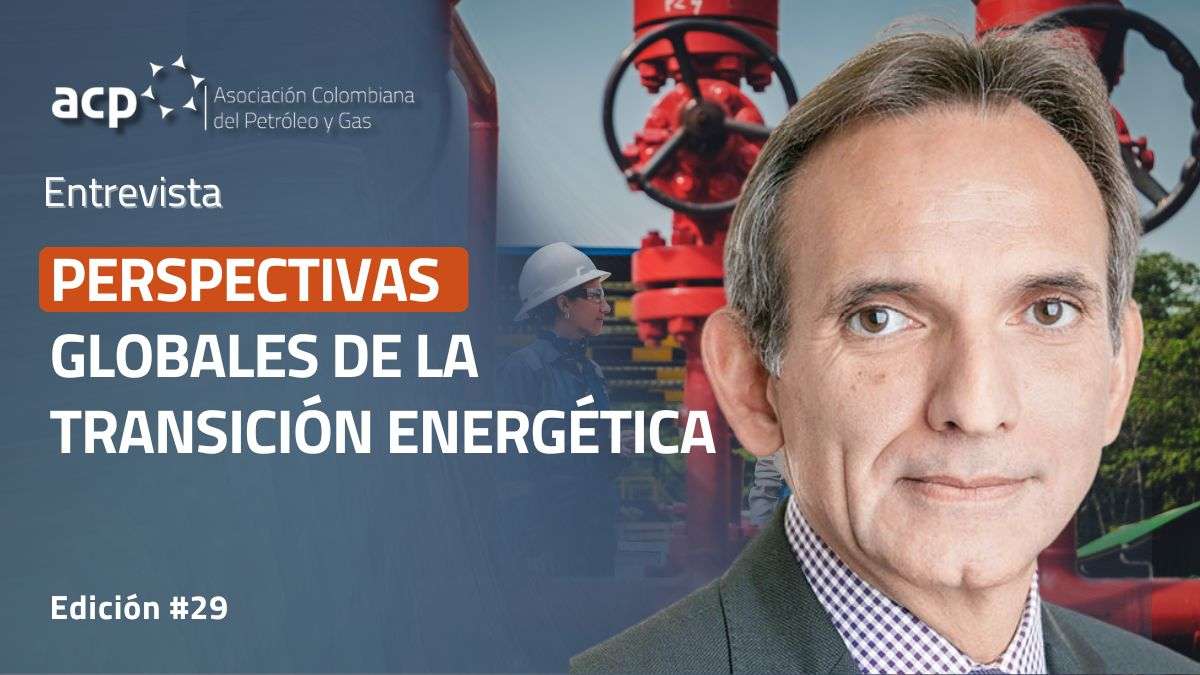
Carlos Pascual, senior vice president of Global Energy at S&P, the world's leading provider of independent credit ratings, talks about how energy justice and regulation in each country will be drivers for advancing the energy transition. In this interview, the expert also explains the scenarios that the rating agency has for a future in which the world does not depend as much on hydrocarbons for its energy supply, but he reminds us that we are still far from having commercially viable technologies to achieve this.
Interview with Carlos Pascual from S&P
How advanced is the world in the energy transition? Which regions or countries are leading the process? Which are lagging behind? And what factors explain these differences?
Carlos Pascual: It is important to remember that never before in history have we attempted the massive transformation of global energy systems in such a short period of time. It took 100 years for oil to replace coal as the main fuel source. In 1990, 80% of the world's energy depended on fossil fuels, and today we are practically at the same level. The investments made in renewable energies have mainly gone to meet additional demand. We are now aiming to achieve net zero emissions by 2050, which will require a transformation in the use of fossil fuels.
Nevertheless, we are making progress in Latin America. Hydropower has been an important source of clean energy, but it is now threatened by climate change, which reduces its reliability. We are also seeing innovations, particularly in countries like Brazil, with the integration of renewable energies to compensate for the lack of hydropower and an increasing integration of gas as a mechanism to support intermittency.
In Northern Europe, renewable energy accounts for between 50% and 60% of the total supply of the grid. In the United States, we saw a great success story in the transition from coal to gas, which had the greatest impact on reducing U.S. emissions. China remains the world's largest investor in renewable energy, far more than Europe or the United States. Where we see a significant gap is in developing countries, which feel they have not had access to capital or technology to meet the energy demands and needs of their people and fulfill their aspirations. A just transition for all countries must be a primary focus as we continue to advance.
What have we learned about how to achieve global climate ambitions?
C.P.: COP28 played a fundamental role in assessing progress under the Paris Agreement. The results were challenging. Nearly 200 countries concluded that the world needs to reduce emissions by 43% below current trajectories to achieve a path toward net zero emissions. A key part of the challenge is that even today we do not have commercially viable technologies for 33% of the emissions that need to be reduced. That is why we need to intensify innovation and the dissemination of technology.
Inevitably, we must recognize that countries will follow multiple paths to reduce their emissions. The variations respond to access to capital, technology, wealth, and natural resources. We also see, around the world, multiple strategies. Some have focused on establishing strict regulations and targets for emission reductions. Other countries with larger budgets, like the United States, focus on subsidies (for example, through the IRA) to help stimulate innovation. Some countries like China have focused on specific industries such as electric vehicles and battery panels, subsidizing their costs, to become the most competitive in the world.
We have learned that to succeed we must innovate. We need technologies that are commercially viable to become the foundation of emission reduction strategies. In the end, if companies cannot find commercially viable ways to meet emission targets, the world will find it difficult to achieve success.
What role do oil and gas producing countries play in the scenarios being proposed?
C.P.: The world needs oil and gas producing countries to succeed in the transition and in energy security. The latter is a fundamental requirement to facilitate the transition process. We need to meet the demands of current energy markets to keep our economies running, create jobs, and the political backing for the energy transition to advance. At the same time, we need the oil and gas industry to provide capital and the capacity to operate at scale. Those characteristics are held by the oil and gas industry. At COP28, more than 50 international oil, gas, and national oil companies signed the decarbonization letter. They, as part of that agreement, commit to achieving net zero emissions in scopes one and two by 2050, and near-zero methane emissions by 2030.
Methane, in particular, is crucial for achieving credibility in the oil and gas sector. We know what the solutions are; they need to be implemented to maintain international support for the industry. Additionally, we need the sector's skills to advance new technologies such as carbon capture and storage and hydrogen. And we will increasingly see that oil and gas companies play a fundamental role in using artificial intelligence to strengthen digital strategies to reduce emissions. In the end, achieving success in this industry will be essential to establish and track metrics for both emission and cost reductions, which provide benefits for consumers and ensure a reliable supply of the energy sources we need for economic growth.
What projections do you have at S&P about how the global energy matrix will be shaped in a 20 to 30-year horizon? What place will fossil fuels occupy?
C.P.: The role of fossil fuels in the future will depend on the development of new technologies and their commercial viability. Let’s try to understand the current dynamics. We are projecting that we will reach peak oil demand in 2029, but we also know that in 2005 we reached peak oil demand in OECD countries. This reflects the availability of a wider range of technologies that could be used and are already being implemented in wealthy countries, allowing them to diversify their energy resources. Peak oil demand in non-OECD countries is expected to be reached in 2038. One of the critical lessons is the importance that the ambitions of developing countries will have in the next two decades.
Regarding natural gas, projections are much more consistent under different scenarios, around 20 to 23% of energy supply until 2050 will still be gas. This projection reflects the important role that gas has played in the transition and its significance as a fundamental tool to address the intermittency of renewable energies.
Regarding the use of these energies, in the most ambitious scenarios, they could represent between 70% and 80% of global primary energy demand by 2050, but we are still far from having commercially viable technologies to achieve this. A critical issue will be the development of hydrogen and its competitiveness to address the demands of hard-to-abate industries such as steel, chemicals, and cement.
Finally, we must recognize the ongoing uncertainty under the energy scenarios we have. This underscores the importance of carbon capture, utilization, and storage as a critical technology for decarbonization in order to address the challenging demands for emission reductions, when commercially viable clean energy technologies are still in the process of evolution.
What role does natural gas play in the global energy transition, and especially in emerging economies like Colombia? How can the country's gas potential be harnessed?
C.P.: Important lessons about the role of natural gas can be learned from history. In the United States, natural gas became the main factor, facilitating the transition from coal, reducing emissions in the energy sector by approximately 50%. When Russia cut off natural gas supplies to Europe in 2022, it had to struggle to find new energy sources. One option was to import more LNG, but that was much more expensive than the availability of gas via pipeline, and the continent had to increase its use of coal as an emergency measure.
In Latin America, natural gas is playing an important role in addressing the intermittency associated with increased renewable energy use and the impacts of climate change on hydroelectric energy. Additionally, natural gas continues to provide a critical source of reliability in the industry. Over time, new technologies like hydrogen will reduce dependence on natural gas, but until they are available, gas is the best alternative to coal to allow industries like steel and cement to continue thriving and being competitive in a global environment.
What are the main challenges and opportunities facing oil and gas producing and exporting countries in the need to diversify their economy and promote sustainable development, both priorities for Colombia?
C.P.: There are many challenges to diversification, but I will mention five. The first is the growing global demand for oil. If there is a gap between supply and demand, prices will rise. This will create political protests and make it much more difficult to support the various diversification processes. Secondly, energy sector diversification depends on local supplies and local regulation. These are much more complicated markets that are difficult to adapt and adjust.
The third limitation focuses on the economic returns of renewable energy. In general, those returns are much lower than those historically generated by the oil and gas sector. Therefore, the transition not only affects economic viability but also impacts government revenues in countries that depend on resources from national oil companies.
The fourth issue is infrastructure. To achieve effective diversification, investments in networks, and transmission and distribution capacities are required. These are costly and require extensive state resources, but also creative mechanisms to leverage private capital. Fifth, there is a challenge in granting permits. This is a global issue. We can see it in the United States, Europe, and in developing countries.
Regarding regulation and public policies, what kind of regulatory frameworks and public policies do you consider essential to balance the transition with energy security, economic development, and social challenges?
C.P.: To understand regulation, we first have to establish our goals. What the world has agreed upon is that the energy transition must be fair, orderly, and must be carried out according to science, in a way that addresses climate change. Energy justice has had many different issues and many definitions. One fundamental aspect is the importance of all countries having access to capital and technology.
Sometimes energy justice focuses on communities, especially coal-producing communities that can no longer provide jobs to their population. And certainly, energy justice must pay attention to energy prices for the poor; this has generally meant energy security, which is the ability of countries to ensure reliable access to energy for their population.
When thinking about all these factors and, at the same time, about reducing emissions to meet the goals of the Paris Agreement, it is necessary to consider the different regulatory structures that have been attempted at the international level. In the United States, it has particularly focused on the importance of innovation and, to this end, the Inflation Reduction Act (IRA) has been approved, which provides subsidies to encourage industries to identify new technologies that can reduce emissions and capture ongoing emissions for the future. Other countries have focused on putting a price on carbon, to establish the cost of increasing emissions, but this is not always a direct incentive for innovation. What carbon prices can do is encourage the development of carbon markets that can channel resources through international capital to the lowest-cost sources for absorbing emissions. For example, through forests and other nature-based activities that have the capacity to serve as “carbon sinks.”.
In many cases, regulations will be fundamental to changing demand. This has been especially important in the development of biofuels and will impact the future development of sustainable aviation fuel (SAF). One lesson we must learn is the importance of partnerships. It is impossible for everyone to invest in the same paths of innovation and technology. To the extent that companies and countries can collaborate and form partnerships to invest in research and exchange experiences from their market activities, we can accelerate the learning process and thereby accelerate the reduction of emissions.
And finally, what innovative strategies do you know that leading companies in the sector are adopting to remain competitive in this transition environment?
C.P.: Reflecting on the transition process and energy security, the ability to create jobs and promote the competitiveness of countries, there are some basic concepts we must return to. The energy companies that will be most successful and the countries that will feel the greatest benefits will focus on two things. One, reducing costs and two, reducing emissions. Both must go together. To reduce costs, we have seen that digital technology is key. It has played a fundamental role over the last decade in identifying greater efficiencies in production. And the world is beginning to expect that artificial intelligence can offer even greater efficiencies in the future.
There will be solutions that are not traditional. For example, by focusing on carbon intensity as a critical metric, we might find that a more effective approach to reducing emissions from hydrocarbon production is to close mature fields and develop new ones, in order to reduce the high production costs associated with water displacement, using even more energy in the pumping, drilling, and marketing process. Transparency (i.e., the ability to measure emissions) will be a factor in our effective response. And thus, countries and companies that have taken a leadership role in identifying where their emissions come from, measuring them, and being transparent about it will achieve greater success.
And finally, I return to the topic of partnerships, which will be absolutely key to sharing the best technologies, capabilities, and lessons with a broader range of companies and countries in achieving the success we need to advance the sustainability of the planet and maintain the security of our energy systems.
 Colombian Association of Oil and Gas