
Statement to the public regarding the suspension of exploratory activity in the Uchuva 2 well
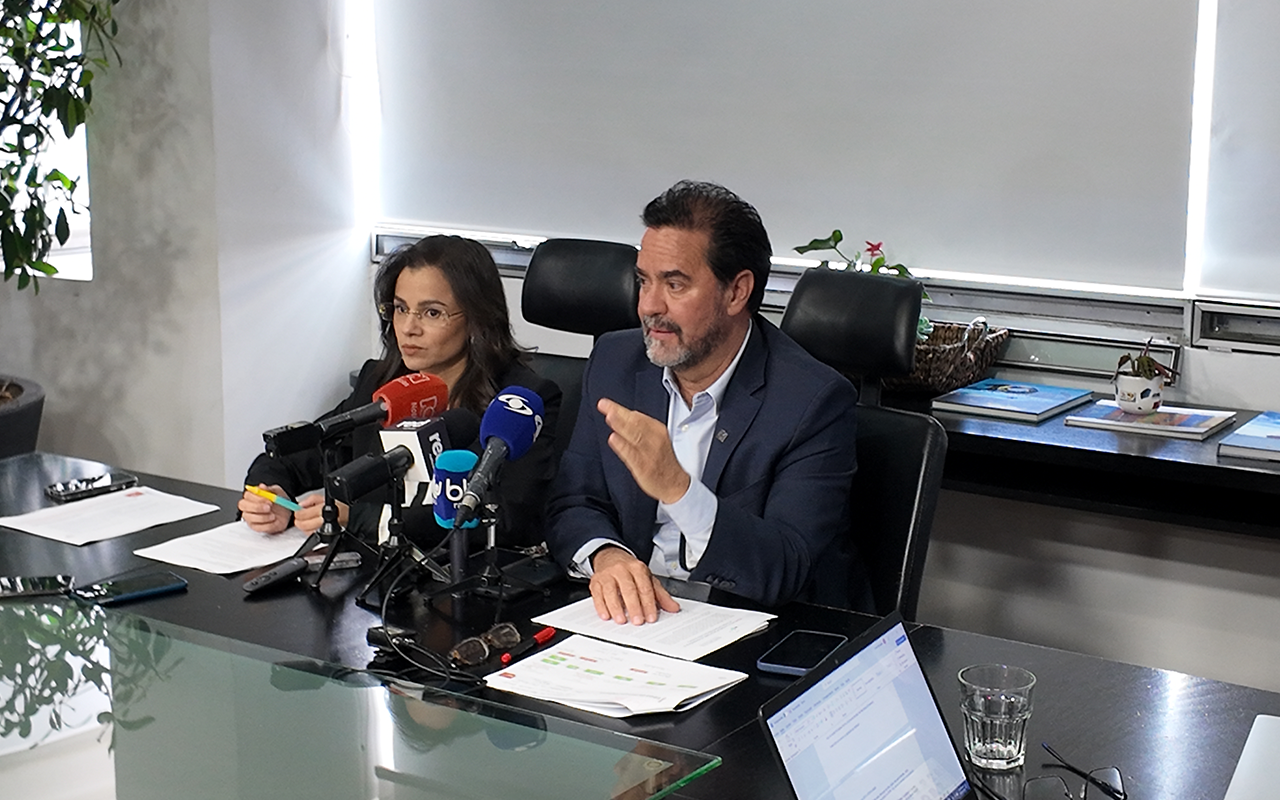
The Colombian Association of Petroleum and Gas (ACP) and the Colombian Association of Natural Gas (Naturgas) express their concern over the ruling that orders the suspension of natural gas exploration activity in the Uchuva 2 well. The companies in the natural gas industry respect and comply with judicial decisions; however, this decision compromises the supply of natural gas that currently benefits 36 million Colombians, even though the competent authorities demonstrated that the fundamental right to prior consultation with the indigenous community of Taganga was not violated.
Regarding the Uchuva 2 project and the compliance with the required procedures for its execution, the ACP and Naturgas state that:
- The Tayrona Block, which includes the Uchuva 2 well, is located 31 kilometers from the coastline, in deep waters (837 meters of water column) in Colombian territorial sea, where the operating company has carried out various activities for over 20 years, in compliance with the contract signed in 2004 with the National Hydrocarbons Agency (ANH).
- The exploratory activities carried out were approved by the competent authorities. The operating company has met all regulatory requirements and necessary procedures, including the Determination of the Non-presence of Indigenous Communities in the project's area of influence, environmental licensing, and obtaining permits from the General Maritime Directorate (DIMAR). Its activities have been conducted in compliance with the highest quality standards and without any recorded environmental impact.
- The execution of the project did NOT violate the fundamental right to prior consultation for any indigenous community, since the Directorate of Prior Consultation of the Ministry of the Interior (DANCP), through Resolution ST-1630 of 2023, confirmed the NON-presence of ethnic communities in the project's area of influence, and therefore also their direct impact.
- The certification of the non-presence of ethnic communities in the project's area of influence has been reiterated by the entity in several administrative acts. And in the 18 years that the company has been executing the project, there has never been any request or report of impacts from the community.
- There is also no demonstrated direct impact related to artisanal fishing activity, considering that the conclusions of the Institute of Marine and Coastal Research (INVEMAR), an organization affiliated with the Ministry of Environment, confirmed the non-existence of artisanal fishing activity in the project's area of influence. This conclusion was also confirmed by the ANLA.
For the President of Naturgas, Luz Stella Murgas, «Today Colombia urgently needs to expedite the development of the offshore projects we have. The Tayrona Block, where Uchuva is located, has apotential of 400 MPCD, an amount that would allow the country to regain self-sufficiency in the medium term. Offshore projects have a potential that can provide Colombia with energy security for several decades, just as Cusiana, Cupiagua, Ballena, and Chuchupa did at the time.».
The President of Naturgas calls on the Taganga community to «consider that in light of the fundamental right to prior consultation that is claimed after two decades of meeting all the required conditions, the access to the essential public service of natural gas is at risk. The dignified life of 36 million Colombians, the nutrition of children, the fundamental right to health, and care for the vulnerable population are at risk.».
For his part, Frank Pearl, president of the ACP, pointed out that «this project is strategic for the energy future of Colombians; by materializing its potential and that of other offshore projects, we will have the opportunity to reverse the critical decline of natural gas reserves and even multiply them by 30. With current reserves, the country would start to have a supply deficit starting in 2025; with contingent and prospective resources (including those from Uchuva), we can continue to guarantee long-term gas self-sufficiency, but for that, exploration and development are required.».
Pearl emphasized that «the critical gas supply situation will not be solvable with national supply without the development of offshore projects,”, and that, “the decisions that delay or suspend the development of projects like this put the energy supply of Colombians at risk and create uncertainty for investors, which also has fiscal implications for the country and the regions.».
Regarding the impact on energy security, the guilds delved into that:
- In Colombia, excluding offshore projects (including Uchuva), new discoveries are insufficient to replenish the oil and gas reserves that are consumed. Offshore projects have high prospectivity for gas, which is key to reversing the critical and progressive decline that gas reserves in the country have been recording; since 2012, they have fallen by 58%.
- The reserve replacement index in the last 10 years (2014-2023) is 251 TCF, meaning that less gas is being discovered than is produced/consumed; for every 10 cubic feet produced, 2.5 are added. For this reason, the Reserves/Production factor also shows a critical situation in gas availability, reaffirming the need to increase exploration and development of this energy source, as well as to resolve contingencies to increase reserves and production.
- In 2023, an increase in existing contingent resources of 291 TCF was recorded, most of which corresponds to offshore resources. This increase is the result of the work and investments made by companies, and to make them viable and incorporate them as reserves, exploration and development are required.
Finally, the ACP and Naturgas reiterate that it is crucial for the country to maintain a legal stability environment that favors the development of essential projects for its energy future, without compromising the rights of communities or the country's energy security; and they call for coordinated work and constructive dialogue with all national and regional stakeholders to ensure that Colombians continue to have a reliable and sustainable supply of natural gas.
 Colombian Association of Oil and Gas