
The hydrocarbon industry is advancing in the consolidation of gender equity
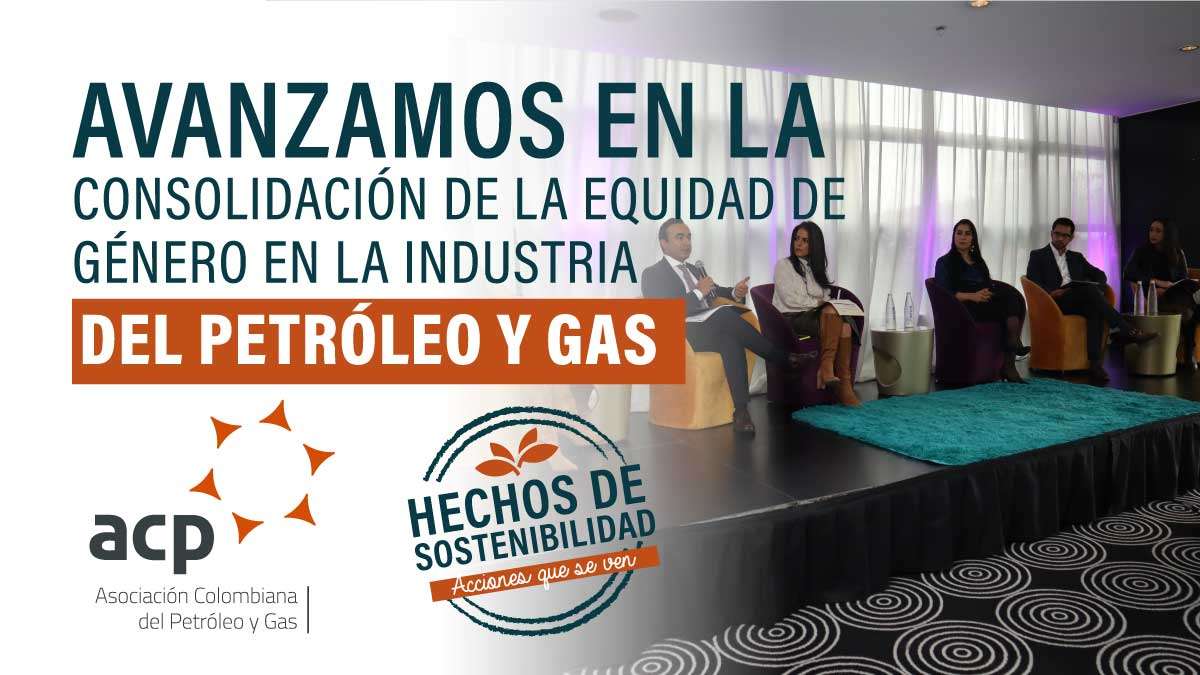
The Colombian Association of Oil and Gas (ACP), in partnership with Women Oil&Gas, led the ‘ACP Gender Equity Forum: Contributions of the industry to closing gaps’, a space for discussion and analysis of equity issues in the hydrocarbons and liquid fuels sector, which left various reflections on the sector's progress in this area and the challenges that persist.
This industry, in the segments of hydrocarbon exploration and production, and fuel distribution, had more than 19,700 women linked to its operations in 2021. Of these, 3,419 worked in Santander, 3,104 in Meta, 2,578 in Arauca, 2,460 in Casanare, 1,850 in Bogotá, and the rest in Cundinamarca, Bolívar, Huila, Putumayo, and Cesar.
“Historically, the oil and gas industry has been characterized by being predominantly male; however, we are convinced of the importance of ensuring gender equality for the sector and society, which is why we have made progress with the implementation of equity policies in companies and the generation of discussion, analysis, and monitoring spaces on equality issues like this one that today brought together unions, companies, community, and Government,” said Francisco José Lloreda, president of the ACP.
For her part, the president of the National Hydrocarbons Agency (ANH), Clara Liliana Guatame, who referred in her presentation to the gender approach in the energy transition in Colombia, stated that “the goal is to include more women in the hydrocarbon industry and this, in the context of a just energy transition, means greater balance between visions, experiences, and perspectives.”.
Regarding the landscape of gender equity in the hydrocarbon sector, Adriana Álvarez, technical director of Insuco, an international consultancy specialized in social sciences and sustainability, highlighted that while there are challenges to overcome on the path to equity, there are advances to note such as the consolidation of labor flexibility schemes, socialized gender equity strategies, and training to eliminate unconscious biases. “Data is key for strategic decision-making, we need to consolidate these exercises, maintain them over time, and leverage them to respond to the particularities of the territories,” she said.
In the discussion ‘Betting on the oil, gas, and liquid fuels sector to advance gender equity’, the country manager of Drummond Energy, Alberto García, emphasized the importance of promoting the training of women in technical areas that allow them to be linked to positions that are currently mostly held by men. “We have differential participation in professional, technical, and operational roles, and that is the great challenge of overcoming that lag, although in the last 20 years this gap has been reduced.”.
The industry has also made progress in promoting gender equity in communities. In 2021, the social investment of companies in the sector (upstream and downstream) totaled more than $455.500 million, benefiting more than 60,000 women, through community strengthening and productive projects; culture, art, and heritage; education, recreation, and sports; and social infrastructure.
An example of the above is the case of Ximena Beltrán, a student of the training program ‘Crece con Frontera’, who from her experience narrated how this initiative transformed her life and that of other women in Puerto Gaitán (Meta): “Currently, we are 24 women who have direct contact with the operational part, in practices that were previously only attended by men. This is an empowerment opportunity that has allowed us to grow in all areas of our lives.”.
The ACP will continue to consolidate its work towards closing gaps and gender equity, with the firm conviction that the oil and gas industry has a fundamental role in this national purpose.
 Colombian Association of Oil and Gas